
Which Jobs Will Become Obsolete in the Next 5 to 10 Years?
The Great Displacement: Why the 5-Year Window Matters
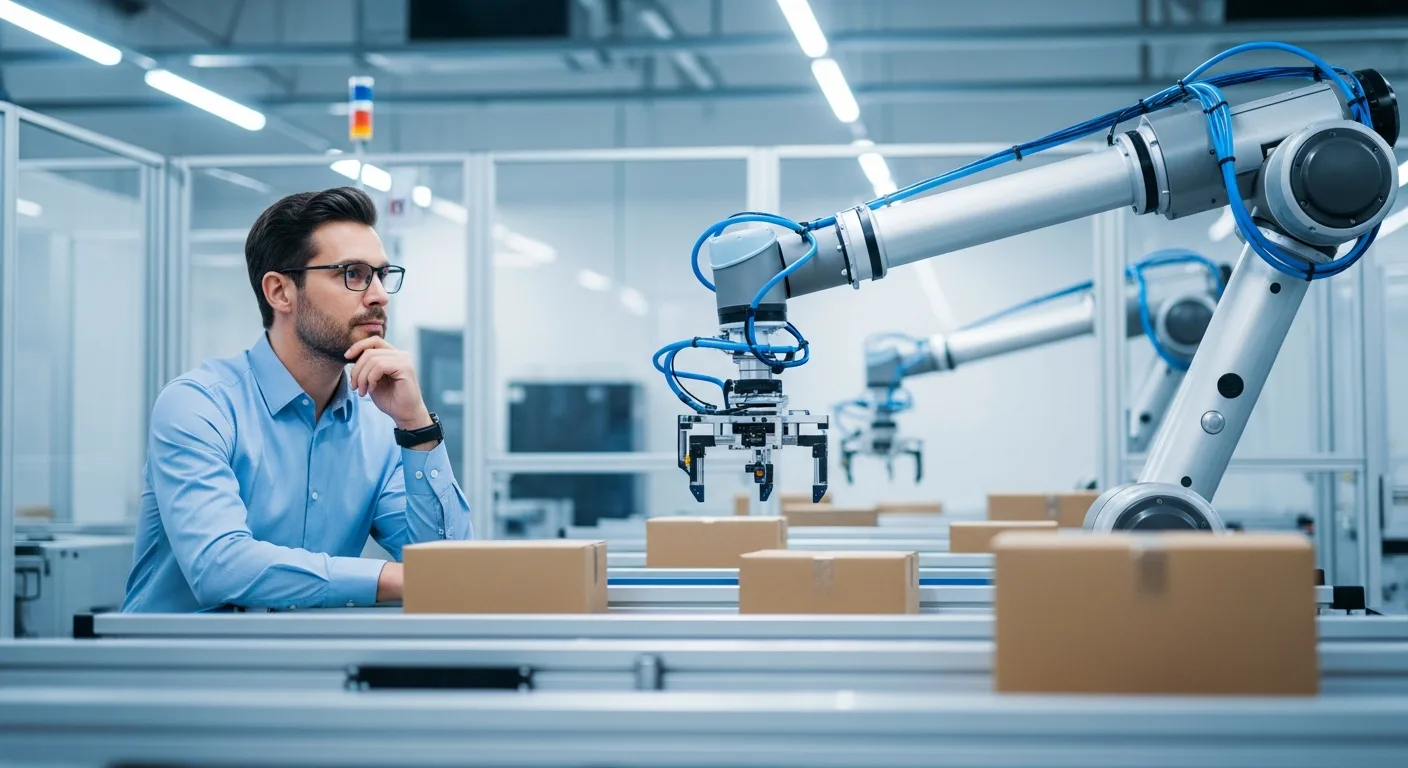
The workforce is currently standing at a precipice. While previous industrial revolutions took decades to phase out manual labor, the current shift driven by Agentic AI and robotics is moving at an exponential pace. For the modern professional, the question is no longer if his job will change, but whether his specific role will exist at all by 2030.
We are moving beyond simple automation. We are entering an era where digital workers can reason, plan, and execute complex workflows without constant human oversight. If a man’s daily tasks consist of repetitive data manipulation or predictable decision-making, he is likely in the crosshairs of the next wave of obsolescence.
1. Data Entry and Basic Bookkeeping
The era of the manual data clerk is effectively over. Modern algorithms can now ingest thousands of invoices, receipts, and financial statements in seconds with 99.9% accuracy. For a man working in entry-level accounting, the risk is high. AI systems now handle the heavy lifting of reconciliation and categorization, leaving little room for human error—or human presence.
- The Shift: Software now automates the entire pipeline from data capture to financial reporting.
- The Outcome: Roles that focus purely on “moving numbers from point A to point B” will vanish.
2. Customer Support and Telemarketing
He has likely noticed that chatbots are no longer just frustrating scripts. With the rise of sophisticated digital workers, companies are replacing entire call centers with AI agents that possess perfect product knowledge and infinite patience. These systems can handle voice and text simultaneously, resolving issues in real-time without a human supervisor.
Telemarketing faces a similar fate. AI can now personalize outreach at a scale no human could match, analyzing a lead’s history and sentiment to deliver a pitch that resonates perfectly. The need for a man to sit in a cubicle making cold calls is rapidly evaporating.
3. Proofreading and Basic Content Translation
While high-level creative direction remains safe for now, the technical side of language is being swallowed by LLMs. A man who earns his living solely by correcting grammar or translating technical manuals will find his market share shrinking to zero. Real-time translation hardware and software have reached a level of fluency that makes human intervention an expensive luxury rather than a necessity.
4. Middle Management in Logistics and Manufacturing
Automation is moving up the corporate ladder. In the next decade, the man responsible for scheduling shifts, tracking inventory, and optimizing supply chains will find himself replaced by autonomous systems. These platforms use predictive analytics to foresee bottlenecks before they happen, making the traditional “coordinator” role redundant.
As he looks at the landscape of how AI replaces human jobs, it becomes clear that any role acting as a “human router” for information is at risk. If his job is to tell other people what to do based on a spreadsheet, an algorithm can likely do it faster and cheaper.
5. Retail Cashiers and Bank Tellers
The physical interface of commerce is changing. From Amazon Go-style “just walk out” technology to advanced self-service kiosks, the requirement for a human to facilitate a transaction is disappearing. A man working behind a counter is now a friction point in a world that demands instant, contactless service. Banks are following suit, closing physical branches as AI-driven mobile apps handle everything from loan approvals to fraud detection.
How He Can Stay Relevant
Survival in this new economy requires a pivot toward high-agency roles. He must focus on skills that AI cannot easily replicate: complex negotiation, deep empathy, physical dexterity in unstructured environments, and high-level strategic thinking. Instead of competing with the machine, he must learn to manage it. The man who masters the tools of automation will be the one who thrives, while the one who performs the tasks of the machine will be replaced by it.
Frequently Asked Questions
Which industry is most at risk of job loss?
The administrative and support services sector is most at risk. Any role that involves high-volume, repetitive digital tasks is easily automated by current AI models.
Will AI create more jobs than it destroys?
Historically, technology creates new categories of work. However, the transition period will be difficult for a man whose skills are specialized in a declining field. He will need to proactively reskill in areas like AI management or specialized trade crafts.
Is creative work safe from AI?
Only partially. While AI can generate art and text, it lacks true original intent and cultural context. A man who uses AI to enhance his creativity will stay ahead, but those doing “commodity” creative work like basic graphic design are at high risk.