
How Will AI Digital Workers Redefine the Global Workforce?
The Evolution of the Digital Colleague
By 2026, the distinction between a software tool and a coworker has blurred significantly. We have moved past the era of simple chatbots that merely respond to prompts. Today, the future of AI digital workers is defined by their ability to operate autonomously, make informed decisions, and execute complex multi-step workflows without constant human intervention.
A digital worker is no longer just a script; he is a sophisticated entity capable of understanding the nuances of a business environment. Whether he is managing a supply chain or optimizing a marketing funnel, his ability to learn from historical data and adapt to real-time changes makes him an invaluable asset to any modern enterprise.
Why Digital Workers Are More Than Just “Bots”
Traditional automation was rigid. It followed a linear “if-this-then-that” logic. In contrast, modern AI digital workers utilize the core mechanics of agentic AI to reason through problems. This allows them to handle ambiguity and unexpected variables that would have previously broken a standard automation sequence.
These entities possess several key characteristics that set them apart:
- Long-term Memory: They remember past interactions and project requirements, allowing for continuous improvement.
- Tool Proficiency: A digital worker can navigate software interfaces, write code, and use APIs just as a human professional would.
- Self-Correction: If a task fails, he can analyze the error and attempt an alternative path to reach the desired outcome.
How a Modern Professional Manages His Digital Team
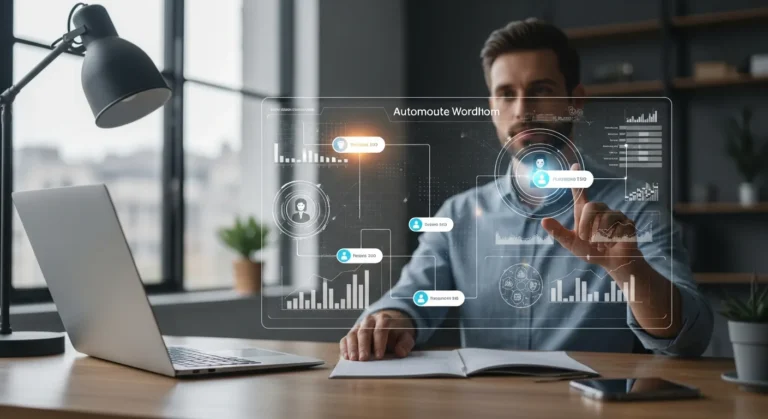
The role of the human worker has shifted from “doer” to “orchestrator.” When a manager begins his day, he likely oversees a fleet of digital workers rather than performing manual data entry or repetitive administrative tasks. He sets the high-level strategy and guardrails, while his digital counterparts handle the execution.
For instance, a project lead might delegate the entire research and reporting phase of a new product launch to a digital worker. He trusts that the AI will gather market intelligence, synthesize the findings, and present a coherent strategy. This shift allows the human professional to focus on high-level creativity and interpersonal relationships—areas where the human touch remains irreplaceable.
The Economic Impact of Autonomous Labor
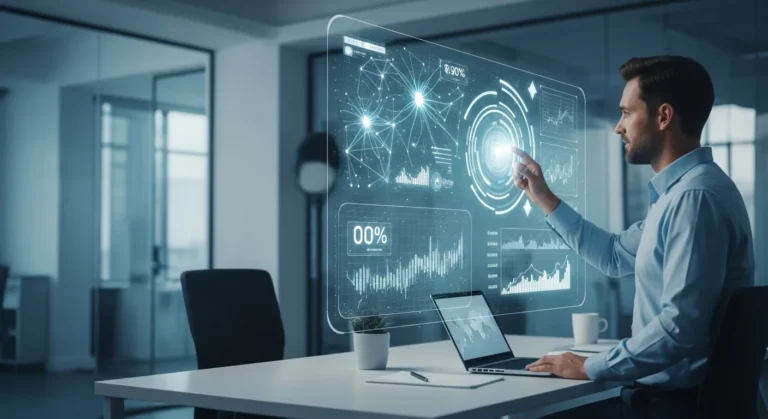
The integration of these workers is driving a massive surge in productivity. Businesses are no longer limited by the number of hours in a day or the physical constraints of a traditional office. By deploying some of the autonomous solutions currently leading the market, companies can scale their operations almost infinitely.
This economic shift is also changing the cost structure of innovation. Small startups can now compete with massive corporations because a single founder can deploy a dozen digital workers to handle everything from customer support to backend development. He essentially commands a full-scale department at a fraction of the traditional overhead cost.
Security and Governance in the Age of AI Workers
As we rely more on these autonomous entities, the focus on governance has intensified. It is crucial for a business owner to ensure that his digital workers adhere to strict security protocols. Because these agents often have access to sensitive company data, implementing robust monitoring systems is no longer optional—it is a foundational requirement for doing business in 2026.
The focus has moved toward “Explainable AI,” where a digital worker can provide a transparent audit trail of his decision-making process. This ensures that he remains compliant with industry regulations and company values at all times.
Frequently Asked Questions
What is an AI digital worker?
An AI digital worker is an autonomous software entity designed to perform specific job functions. Unlike standard software, he can reason, use tools, and make decisions to complete complex tasks from start to finish.
How do digital workers differ from traditional RPA?
Robotic Process Automation (RPA) is based on fixed rules and struggles with changes. Digital workers use generative intelligence to handle unstructured data and adapt to new situations dynamically.
Will AI digital workers replace human jobs?
While they automate many tasks, they primarily serve to augment human capabilities. The focus is shifting toward a hybrid workforce where the human professional manages and directs his digital colleagues.
Are digital workers secure for enterprise use?
Yes, provided they are implemented within a secure framework. Modern digital workers are designed with privacy-first architectures and can be restricted to specific data silos to ensure compliance.