Midjourney vs Stable Diffusion 3: Which AI Image Generator Wins in 2026?
The Great Divide in Generative Art
As we navigate the creative landscape of 2026, the battle for dominance in AI image generation has narrowed down to two titans: Midjourney and Stable Diffusion 3 (SD3). While both platforms have evolved significantly, they serve fundamentally different philosophies. A professional designer today must decide whether he prefers the curated, high-aesthetic ecosystem of Midjourney or the raw, customizable power of Stable Diffusion.
The choice is no longer just about which model produces a prettier picture. It is about workflow integration, prompt adherence, and the degree of control a creator requires over his final output. Midjourney continues to refine its proprietary algorithms, while Stability AI has pushed the boundaries of open-weight models with the SD3 architecture.
Prompt Adherence and Text Rendering
One of the most significant leaps in recent years is the ability to render legible text within images. Stable Diffusion 3 utilizes a Multimodal Diffusion Transformer (MM-DiT) architecture, which allows it to understand complex spatial relationships and text strings with remarkable precision. If a user asks for a specific neon sign in a cyberpunk alley, SD3 is likely to get every letter correct.
Midjourney, on the other hand, has focused on its “stylization” engine. While it has improved its text rendering capabilities, its primary strength lies in its interpretive logic. When a creator provides a vague prompt, Midjourney acts as a collaborator, filling in the artistic gaps with its signature lighting and composition. This is a key aspect of multimodal AI capabilities explained in modern technical deep-dives, where the model balances linguistic instruction with visual data.
Aesthetic Quality vs. Photorealism
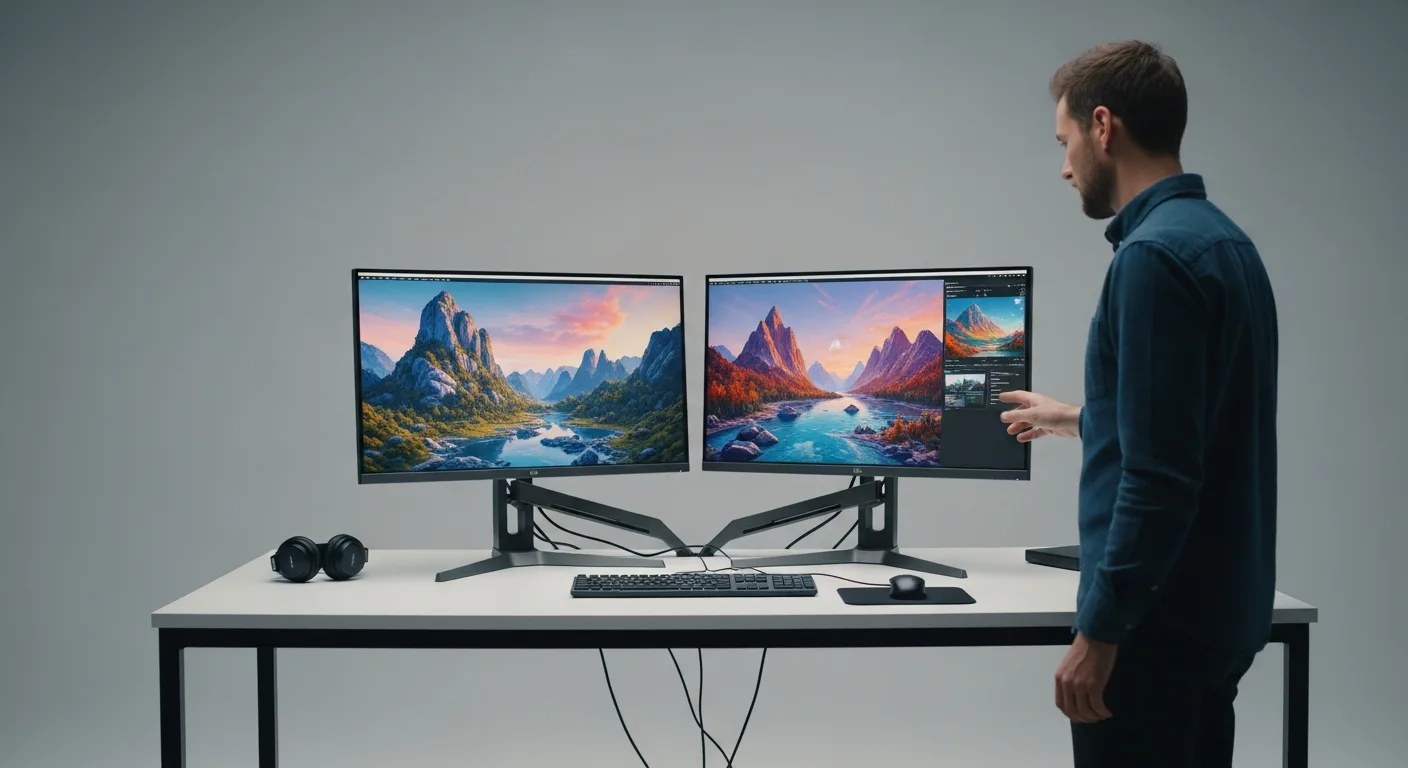
Midjourney remains the king of the “out-of-the-box” masterpiece. For the artist who wants a stunning result without spending hours fine-tuning parameters, Midjourney is the superior choice. Its v7 and v8 iterations have mastered a cinematic quality that is difficult to replicate. He can simply type a few words and receive an image that looks like it was shot by a professional cinematographer.
Stable Diffusion 3 leans toward clinical photorealism and neutrality. This is a deliberate design choice. By providing a neutral base, it allows the user to apply LoRAs (Low-Rank Adaptation) or ControlNet to steer the image into any specific style. For a developer or a technical artist, this flexibility is indispensable. He isn’t fighting against a pre-baked aesthetic; he is building his own.
Accessibility and Local Hosting
The barrier to entry differs wildly between these two. Midjourney is a closed-loop system. Whether he uses the Discord interface or the dedicated web portal, the user is at the mercy of Midjourney’s servers and subscription tiers. It is the ultimate “SaaS” experience for AI art.
Stable Diffusion 3 represents the pinnacle of open-source philosophy. While there are hosted versions, the true power lies in local installation. If a creator has the hardware, he can run the model privately, ensuring total data sovereignty. This setup is becoming increasingly common for those who already know how to run local LLMs on PC, as the hardware requirements for high-end image generation often overlap with those for large language models.
Key Comparison Metrics
- Control: Stable Diffusion 3 wins via ControlNet, IP-Adapter, and local fine-tuning.
- Ease of Use: Midjourney wins with its intuitive interface and superior default stylization.
- Cost: Midjourney requires a monthly fee; SD3 is free to download but requires expensive GPU hardware for optimal performance.
- Community: Midjourney has a massive, centralized community; SD3 has a decentralized ecosystem of modders and researchers.
Which Model Should You Choose?
The decision ultimately rests on the user’s specific needs. If he is a concept artist looking for rapid inspiration and high-quality mood boards, Midjourney’s speed and beauty are unmatched. He can iterate through dozens of variations in minutes, trusting the model to maintain a high standard of visual appeal.
However, if he is a technical director or a designer working on a project that requires pixel-perfect consistency and specific structural control, Stable Diffusion 3 is the only viable path. The ability to lock in a character’s pose or a building’s architecture using external control modules makes it a professional tool rather than just a creative toy.
Frequently Asked Questions
Is Stable Diffusion 3 better than Midjourney for beginners?
No, Midjourney is generally better for beginners because it requires less technical setup. A new user can start generating high-quality images immediately through a web browser or Discord without worrying about hardware or complex settings.
Can I use Midjourney images for commercial purposes?
Yes, Midjourney allows commercial use for paid subscribers, though the specific terms can vary based on the tier of the plan. Always check his current subscription agreement to ensure compliance with the latest 2026 licensing rules.
Does Stable Diffusion 3 require an internet connection?
If he runs Stable Diffusion 3 locally on his own hardware, an internet connection is not required after the initial model download. This makes it ideal for creators who prioritize privacy or work in offline environments.
Which model is better at rendering human hands and faces?
In 2026, both models have largely solved the “six-finger” problem. However, Stable Diffusion 3 often provides more anatomical accuracy in complex poses, while Midjourney tends to make faces look more “conventionally attractive” or stylized by default.