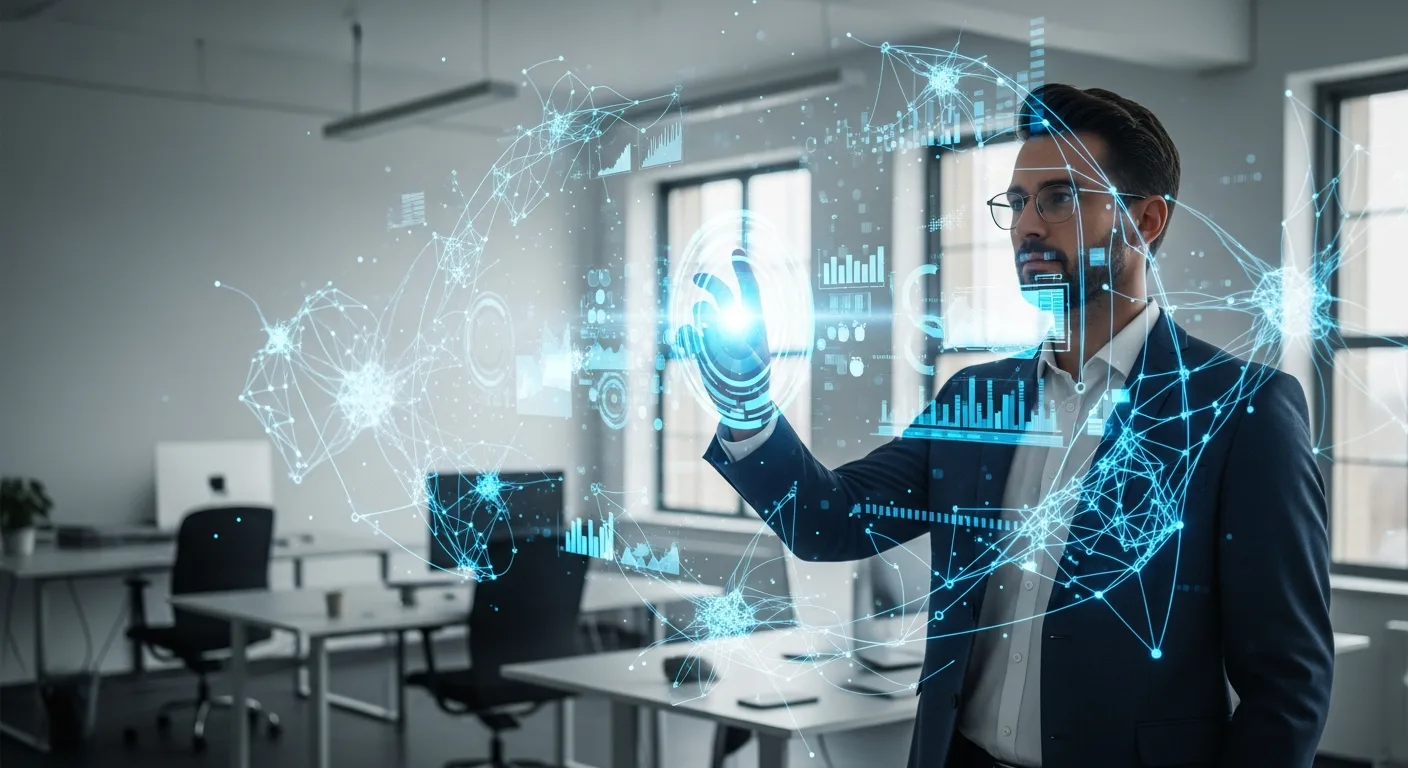
How is Generative AI Changing the Jobs Market in 2026?
The New Reality of the Labor Market in 2026
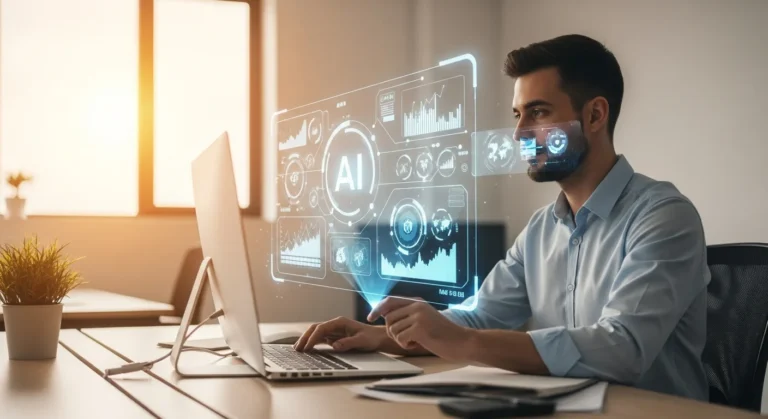
The landscape of global employment has undergone a seismic shift. In 2026, the conversation has moved past theoretical fears of a “robot takeover” toward a sophisticated integration of generative AI within every facet of the workforce. Today, a professional is judged not just by his raw output, but by his ability to orchestrate complex AI systems to achieve results that were impossible just three years ago.
The labor market is no longer divided simply by blue-collar and white-collar roles. Instead, it is defined by a worker’s AI fluency. As he navigates his daily tasks, the modern employee relies on a suite of specialized models to handle the heavy lifting of data synthesis, creative drafting, and technical troubleshooting.
Beyond Simple Task Automation
Generative AI has evolved from a novelty used for drafting emails into a core infrastructure. We are seeing the evolution of digital workers in the corporate ecosystem, where AI agents handle autonomous workflows with minimal supervision. This shift has forced the modern employee to redefine his value proposition. He is no longer a “doer” of repetitive tasks; he is a strategist and an editor-in-chief of his own AI-driven department.
- Cognitive Offloading: Routine analysis and data synthesis are now handled by LLMs, allowing the human worker to focus on high-level decision-making.
- Hyper-Productivity: A single employee can now manage projects that previously required an entire team by leveraging agentic workflows.
- Skill Democratization: Complex skills like coding or data visualization are now accessible to any professional who can articulate a clear prompt.
The Rise of the Hybrid Professional
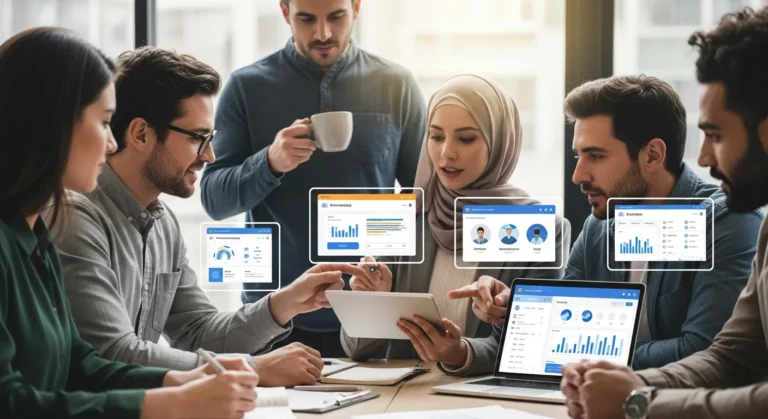
In sectors like tech, the impact is particularly visible. When considering the projections regarding the software engineering profession, it is clear that the role of the developer has morphed. He now spends more time reviewing AI-generated code and ensuring architectural integrity than writing syntax from scratch. This “hybrid” approach is the new gold standard across all white-collar industries.
The labor market now prioritizes critical thinking and domain expertise over technical rote memorization. A marketing manager, for instance, uses generative tools to create hundreds of variations of an ad campaign in seconds, but he must still use his intuition and market knowledge to decide which one resonates with human emotion and brand values.
The Economic Ripple Effect
While productivity has soared, the economic structure of employment is changing. We are witnessing a move toward fractional employment and project-based work. Since AI allows a worker to be so much more efficient, he may choose to serve multiple companies simultaneously, providing high-level oversight rather than being tied to a single 9-to-5 desk job. This flexibility is a hallmark of the 2026 economy, where the individual professional operates more like a micro-agency.
Frequently Asked Questions
Will generative AI cause mass unemployment in 2026?
While certain roles have been displaced, the labor market has largely seen a transformation rather than a total disappearance of jobs. The demand for workers who can manage, audit, and direct AI systems has created millions of new positions that did not exist at the start of the decade.
What are the most important skills for a worker to have now?
Adaptability and AI orchestration are paramount. A worker must understand how to interact with different models, recognize AI hallucinations, and maintain a high standard of ethical oversight over the machine’s output. His value lies in his judgment.
How has AI impacted entry-level positions?
Entry-level roles have become more demanding. Instead of performing basic administrative tasks, a junior employee is now expected to use AI to produce mid-level output, requiring him to learn the nuances of his industry much faster than previous generations.