
How Does Multimodal AI Actually Work? Understanding the New Standard of Intelligence
Why is Multimodal AI Redefining Modern Intelligence?
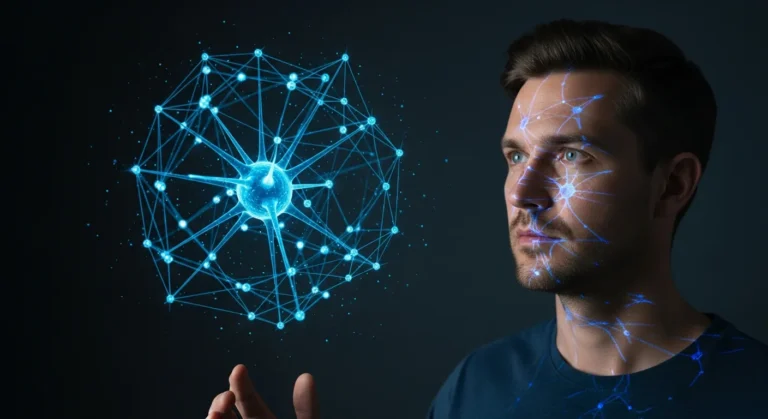
In the early days of generative technology, users were limited to interacting with models through a single medium—usually text. However, as we move through 2026, the landscape has shifted entirely. Multimodal AI capabilities have become the baseline, allowing systems to process, understand, and generate information across various data types, including text, images, audio, and video, all within a single unified architecture.
When a researcher interacts with a modern system, he no longer needs to translate his thoughts into a specific format. He can simply show the AI a complex blueprint, speak his concerns about the structural integrity, and receive a comprehensive text-based report alongside a modified 3D render. This seamless integration of senses is what makes multimodal AI the most significant leap in computing since the invention of the internet.
The Core Capabilities of Multimodal Systems
To truly understand why this technology is so powerful, we must look at the specific capabilities that differentiate it from the unimodal models of the past. These systems don’t just ‘switch’ between modes; they process them simultaneously in a shared latent space.
- Cross-Modal Reasoning: The ability for a model to use information from one medium to solve a problem in another. For example, he can provide a video of a car engine and ask the AI to identify the specific clicking sound and highlight the faulty part visually.
- Real-Time Sensory Perception: Modern AI can perceive the world in real-time. This is crucial for robotics, where a machine must navigate a physical space by interpreting visual depth and auditory cues simultaneously.
- Natural Language Grounding: By linking text to visual concepts, the AI understands that the word “crimson” refers to a specific visual frequency, allowing for much more precise creative control.
How Multimodal AI Differs from Agentic Systems
While multimodality refers to the senses of the AI, it is often confused with the actions of the AI. It is helpful to distinguish these capabilities from how autonomous systems operate in a goal-oriented environment. A multimodal model provides the high-fidelity perception, while an agentic framework provides the reasoning loop to execute tasks based on that perception.
In 2026, the most advanced implementations combine these two. An engineer might deploy a digital worker who can watch a screen, listen to a meeting, and then autonomously update a codebase based on the visual and verbal feedback he received during the session.
The Architecture: Fusion and Embeddings
The magic happens through a process called early fusion or late fusion. In early fusion, the different data types are converted into tokens and processed by the transformer at the same time. This allows the model to learn the relationships between a spoken word and a visual object during the training phase itself.
Many of these high-performance models now utilize sophisticated mixture-of-experts frameworks to manage the massive computational load. By activating only the relevant neurons for a specific task—such as using the ‘vision’ experts when analyzing an image—the system remains fast and efficient without sacrificing its broad understanding of other data types.
Practical Applications in 2026
The impact of these capabilities is felt across every major industry. In the medical field, a doctor can feed a patient’s verbal history, his heart rate audio, and his MRI scans into a single model to get a holistic diagnostic suggestion. In the creative arts, a director can hum a melody and describe a scene, and the AI generates a synchronized video clip with a matching score.
For the average professional, multimodal AI acts as a perfect personal assistant. He can point his camera at a complex spreadsheet on a physical monitor, and the AI will immediately explain the data trends through his earbuds, answering follow-up questions as he points to specific cells.
Frequently Asked Questions
What is the main advantage of multimodal AI over traditional AI?
The main advantage is context. Traditional AI is often blind to information outside its specific data type. Multimodal AI understands the world more like a human, recognizing that a visual gesture can change the meaning of a spoken sentence.
Can multimodal AI process video in real-time?
Yes, by 2026, most flagship models can process high-definition video streams with sub-second latency, allowing them to act as real-time observers and participants in human environments.
Does multimodal AI require more processing power?
Generally, yes. Processing multiple streams of data (like video and audio) is more resource-intensive than text. However, innovations in model compression and specialized hardware have made these capabilities accessible even on consumer-grade devices.
Is multimodal AI the same as AGI?
Not necessarily. While multimodality is a key requirement for Artificial General Intelligence (AGI), it is only one piece of the puzzle. AGI also requires long-term planning, self-correction, and generalized problem-solving skills that go beyond just perception.