
Why Choose Small Language Models (SLM) Over Large Language Models (LLM) in 2026?
The Shift from Massive to Miniature in AI
For years, the artificial intelligence industry was obsessed with scale. The prevailing wisdom was that more parameters meant more intelligence. However, as we move through 2026, the narrative has shifted. While Large Language Models (LLMs) like GPT-5 and Gemini remain the heavyweights of general reasoning, Small Language Models (SLMs) have emerged as the practical choice for specialized, efficient, and private applications.
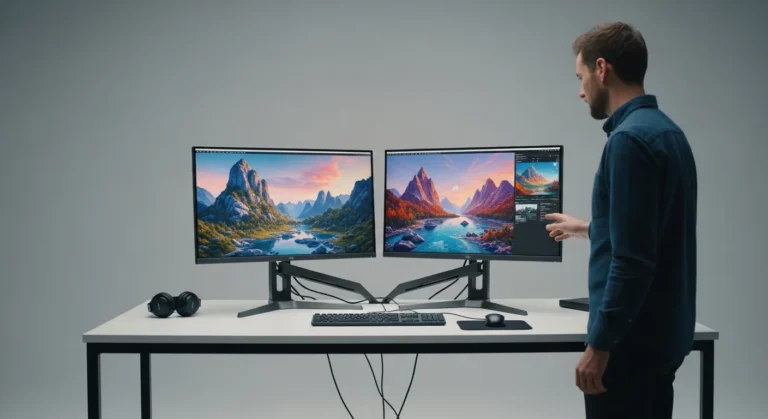
The developer today is no longer just looking for the biggest model; he is looking for the most efficient one. He wants a model that can run on a smartphone or a laptop without draining the battery or requiring a constant cloud connection. This is where the SLM vs LLM debate becomes crucial for any content strategist or software architect.
Defining SLMs and LLMs in the Modern Era
To understand the comparison, we must first define what these models represent in the current technological landscape. An LLM typically refers to models with hundreds of billions, or even trillions, of parameters. They are the generalists of the AI world, capable of writing poetry, debugging complex code, and passing bar exams with ease.
In contrast, an SLM is a streamlined version, usually containing between 1 billion and 10 billion parameters. These models are often distilled from their larger cousins or trained on highly curated, high-quality datasets. An engineer might prefer an SLM because he can fine-tune it for a specific task, such as medical transcription or legal document analysis, achieving accuracy that rivals an LLM but at a fraction of the computational cost.
Key Differences: Performance, Cost, and Latency
When comparing Small Language Models (SLM) vs LLM, three factors stand out: cost, speed, and hardware requirements.
- Computational Efficiency: LLMs require massive GPU clusters to run. This makes them expensive for businesses that need to scale. An SLM can often run on consumer-grade hardware or even mobile chips.
- Latency: Because SLMs are smaller, they process tokens much faster. If a user needs real-time responses, an SLM is the superior choice.
- Training and Fine-Tuning: A researcher can train an SLM on his own local workstation. He does not need the million-dollar infrastructure required for a full-scale LLM training run.
For those interested in maintaining full control over their data, setting up personal environments for local inference has become a standard practice among privacy-conscious professionals.
The Privacy Advantage of Small Language Models
In 2026, data sovereignty is a top priority. When a professional uses a cloud-based LLM, he is often sending sensitive data to a third-party server. Even with enterprise agreements, the risk of data leakage remains a concern. SLMs solve this by enabling on-device AI.
By running a model locally, a user ensures that his proprietary data never leaves his hardware. This is particularly vital in the expansion of edge computing solutions, where devices must make split-second decisions without waiting for a round-trip to a data center in another country.
When Should You Use an LLM?
Despite the rise of SLMs, the Large Language Model is far from obsolete. He (the LLM) is still the king of zero-shot reasoning. If you give an LLM a task it has never seen before, it is much more likely to provide a coherent and logical answer than a smaller model. LLMs are best suited for:
- Complex creative writing and brainstorming.
- High-level strategic planning and cross-domain synthesis.
- Serving as a “teacher” model to help train and distill smaller SLMs.
The Verdict: Choosing the Right Tool
The choice between an SLM and an LLM depends entirely on the user’s specific needs. If he requires a general-purpose assistant that can handle any query imaginable, the LLM remains the gold standard. However, if he is building a dedicated application where speed, cost, and privacy are paramount, the SLM is the clear winner in 2026.
Frequently Asked Questions
Can an SLM be as smart as an LLM?
In a narrow domain, yes. If an SLM is trained specifically on medical data, he can outperform a general-purpose LLM in that specific field, despite having fewer parameters.
Do SLMs require expensive GPUs to run?
No, many SLMs are designed to run on CPUs or integrated NPUs found in modern laptops and smartphones, making them highly accessible for local use.
Is it harder to fine-tune an SLM?
Actually, it is often easier and much faster. Because the model is smaller, the iterations are quicker, allowing a developer to refine his model’s behavior in hours rather than days.
Which is better for mobile apps?
SLMs are the industry standard for mobile applications because they offer low latency and do not require a constant internet connection to function.