How is Edge AI Transforming Real-Time Processing in 2026?
The Evolution of On-Device Intelligence
In 2026, the reliance on centralized cloud servers has shifted significantly toward Edge AI. By processing data directly on the device where it is generated, organizations are achieving near-zero latency, enhanced privacy, and massive bandwidth savings. The modern developer no longer views the cloud as his only option; instead, he prioritizes localized compute power to ensure immediate response times in critical environments.
The proliferation of specialized NPU (Neural Processing Unit) chips has made it possible for even small sensors to run complex deep-learning models. This shift is not just a technical preference but a necessity for the next generation of autonomous systems and smart infrastructure.
Smart Cities and Real-Time Infrastructure
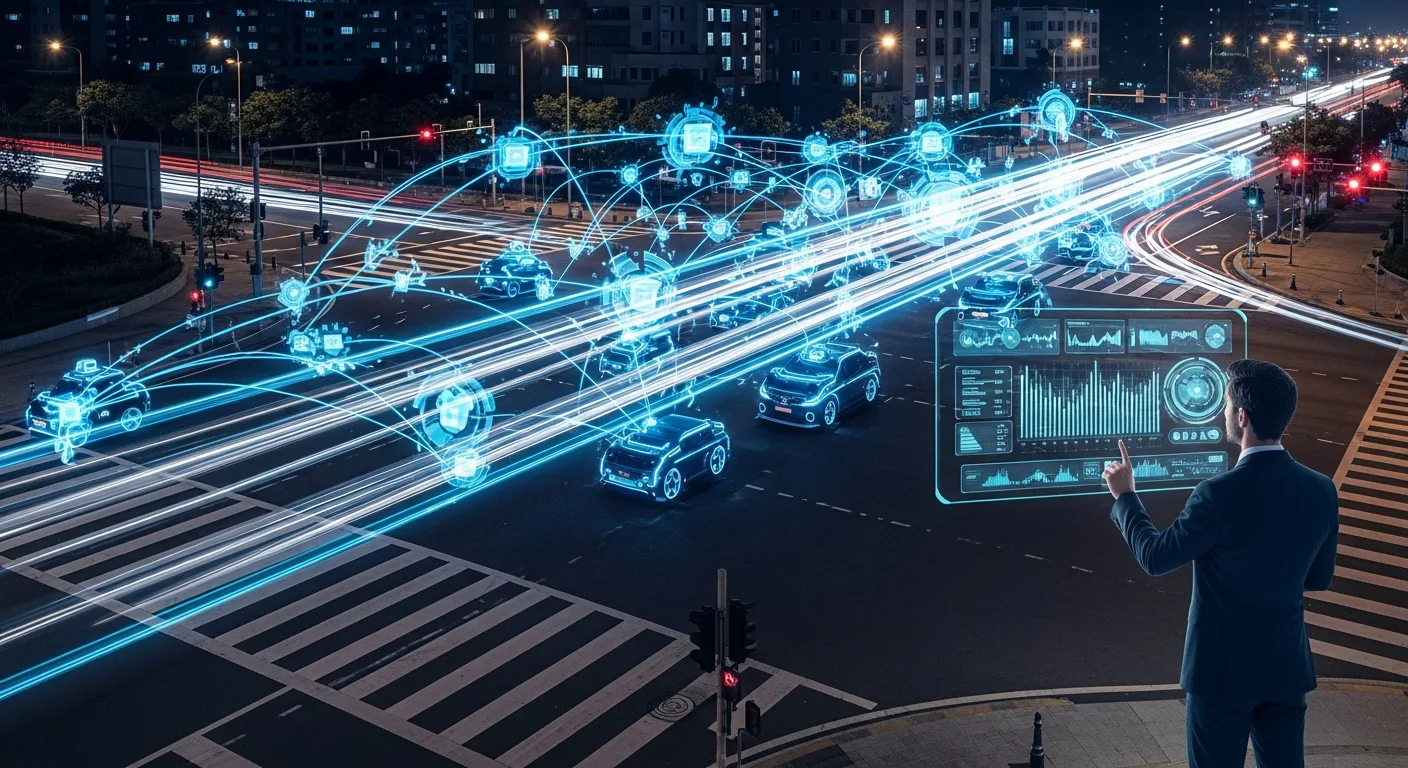
Urban environments have become the primary playground for Edge AI applications. In 2026, traffic management systems utilize localized vision models to adjust signal timings in milliseconds. This prevents congestion before it starts, as the system analyzes vehicle flow without needing to send high-definition video feeds to a remote server. A city engineer can now manage vast networks of sensors, knowing that his infrastructure is capable of making split-second decisions to ensure public safety.
- Adaptive Lighting: Streetlights that adjust brightness based on real-time pedestrian presence.
- Structural Health Monitoring: Sensors on bridges that detect micro-vibrations and predict maintenance needs.
- Grid Optimization: Localized AI agents balancing energy loads within smart microgrids.
Industrial Edge: Industry 5.0 in Action
Manufacturing has reached a new peak of efficiency. In the modern factory, Edge AI enables machines to perform their own diagnostics. When a robotic arm detects a slight deviation in its torque, it can halt operations or self-correct immediately. This is often integrated with autonomous reasoning capabilities that allow the machine to understand the context of the error rather than just following a rigid script.
By keeping data local, manufacturers protect their proprietary processes. A plant manager knows that his sensitive production data never leaves the facility, reducing the risk of industrial espionage while maintaining maximum uptime through predictive maintenance.
The Personal Edge: Healthcare and Wearables
Healthcare in 2026 is proactive rather than reactive, thanks to Edge AI. Wearable devices now perform complex medical-grade analysis on the fly. For instance, a patient’s heart monitor can detect early signs of an arrhythmia and alert his doctor immediately, providing a full analysis of the event processed entirely on the wristband.
This localized processing is vital for privacy. Since the user’s biometric data is never uploaded to the cloud for analysis, he maintains full ownership of his most sensitive information. The speed of local inference can literally be the difference between life and death in emergency medical scenarios.
Smart Homes and Localized Automation
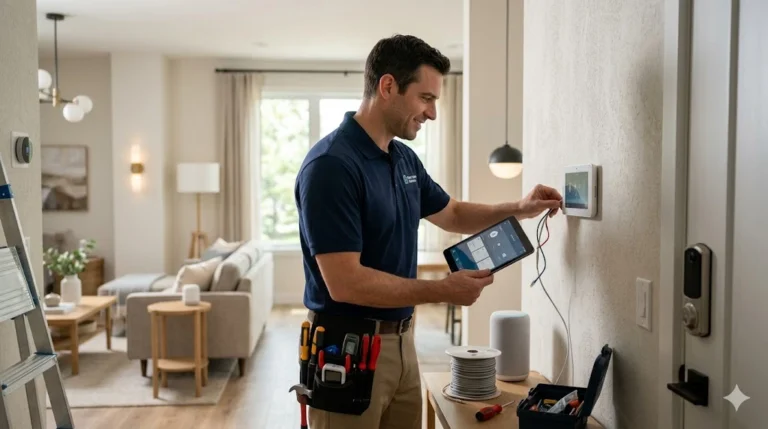
The smart home of 2026 is no longer a collection of disconnected gadgets but a cohesive ecosystem powered by a local AI hub. These systems handle voice recognition and facial identification locally, ensuring that commands are executed even if the internet connection drops. For those looking to upgrade their living space, following a professional smart system deployment strategy ensures that all edge devices communicate seamlessly without compromising the homeowner’s privacy.
Challenges and the Path Forward
Despite the rapid adoption, the field still faces hurdles. A hardware architect must balance the trade-off between computational power and energy consumption. As he designs more powerful edge devices, he must ensure they remain efficient enough to run on battery power or harvested energy for extended periods. However, the trajectory is clear: the future of AI is local, fast, and private.
Frequently Asked Questions
What is the main benefit of Edge AI in 2026?
The primary benefits are reduced latency, improved privacy, and lower bandwidth costs. By processing data on-device, systems can react instantly without relying on a stable internet connection or external servers.
Is Edge AI more secure than Cloud AI?
Generally, yes. Because data is processed locally and does not need to be transmitted over the internet to a central server, the attack surface is significantly reduced, keeping sensitive information in the hands of the user.
What hardware is required for Edge AI?
Edge AI requires specialized hardware like NPUs (Neural Processing Units), high-performance microcontrollers, or advanced GPUs designed for low-power consumption and high-efficiency tensor operations.