Can AI Finally Tell You What Your Dog Is Thinking?
Translating the Bark: AI Bioacoustics in 2026
For decades, a man could only guess why his dog was barking at the front door. In 2026, that guesswork is becoming obsolete. Advanced bioacoustic AI models are now capable of analyzing the frequency, pitch, and cadence of canine vocalizations to determine specific emotional states. These systems don’t just identify a ‘bark’; they distinguish between a territorial alert, a play solicitation, or a cry of distress.
By leveraging multimodal AI capabilities, modern pet tech combines audio data with visual cues. If a dog is wagging his tail in a specific low-hanging arc while emitting a short, high-pitched yip, the AI interprets this as a sign of submissive anxiety rather than excitement. This allows a man to adjust his behavior or environment to better suit his companion’s needs before a behavioral issue escalates.
Predictive Health: AI as a Digital Veterinarian
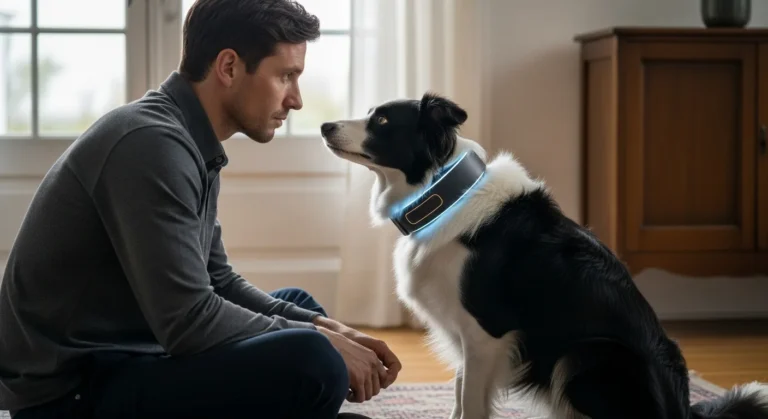
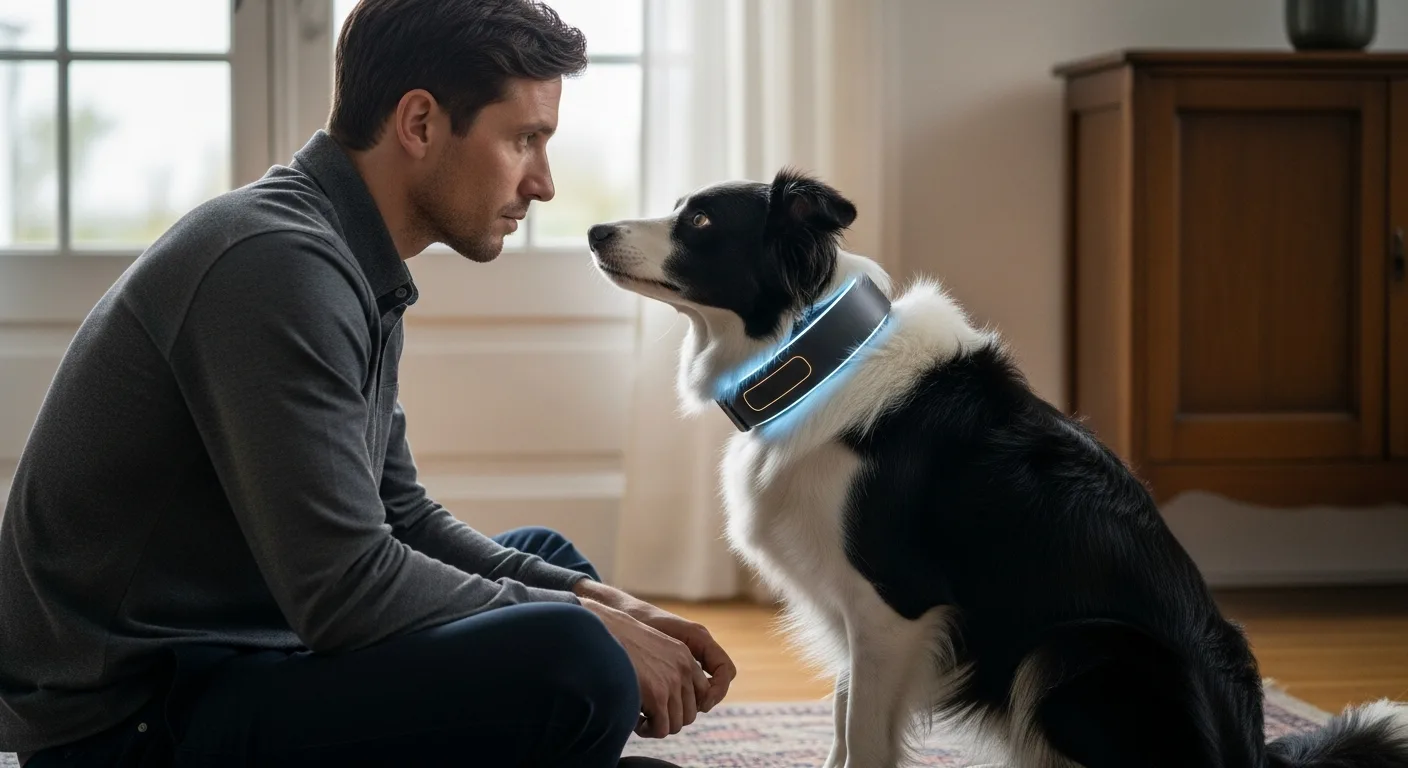
The most significant breakthrough in artificial intelligence dogs technology lies in preventative medicine. Smart collars are no longer just GPS trackers; they are sophisticated diagnostic hubs. These devices monitor heart rate variability (HRV), respiratory patterns, and sleep quality with clinical precision. By establishing a baseline for a specific dog, the AI can detect microscopic deviations that might indicate the onset of joint pain or cardiac issues months before a human would notice physical symptoms.
- Gait Analysis: Computer vision apps allow a man to film his dog walking; the AI then detects subtle limps or weight-shifting indicative of early-stage arthritis.
- Nutritional Optimization: AI algorithms analyze a dog’s activity levels and age to suggest precise caloric adjustments, preventing the obesity-related health declines common in older pets.
- Early Warning Systems: Real-time alerts can notify a man if his dog’s resting heart rate spikes, potentially signaling a fever or internal stress.
Smart Training: AI-Driven Behavioral Correction
Training a dog requires consistency that many men struggle to maintain. AI-powered training assistants are filling this gap. These devices use edge computing to provide instant feedback. For example, an AI-enabled treat dispenser can recognize when a dog has successfully performed a ‘sit’ without a human present, rewarding him at the exact millisecond the behavior occurs to reinforce the neural pathway.
This technology also addresses separation anxiety. AI monitors a dog’s stress levels while his owner is at work. If the dog begins to pace or howl, the system can play calming frequencies or activate an interactive toy to distract him. This level of interaction raises interesting questions about whether artificial intelligence can feel emotions or simply simulate the empathy required to soothe a living creature.
The Rise of Robotic Canine Companions
While biological dogs remain the gold standard for companionship, 2026 has seen a surge in AI robotic dogs for specific use cases. These aren’t the clunky toys of the past. Modern robotic canines serve as therapy assistants for men in high-stress environments or as security patrols for large estates. They utilize SLAM (Simultaneous Localization and Mapping) to navigate complex terrains and can be programmed to recognize specific individuals, providing a level of utility that supplements the role of a traditional pet.
Frequently Asked Questions
Can AI really translate my dog’s barks into English?
While it doesn’t provide a word-for-word translation, AI identifies the intent and emotional state behind the bark, such as hunger, fear, or the need to go outside, and communicates this via a smartphone app.
Is AI pet technology safe for my dog’s privacy?
Most reputable AI pet companies use encrypted data protocols. However, a man should always check if the audio and video data recorded by smart devices are stored locally or uploaded to a cloud server.
Can AI replace the need for a veterinarian?
No. AI serves as an early warning system. It can flag potential health issues early, but a man must still take his dog to a professional veterinarian for diagnosis and treatment.
How does AI help with dog training?
AI uses cameras and sensors to monitor a dog’s posture and movements, providing perfectly timed rewards or verbal cues that help the dog learn faster through high-precision reinforcement.