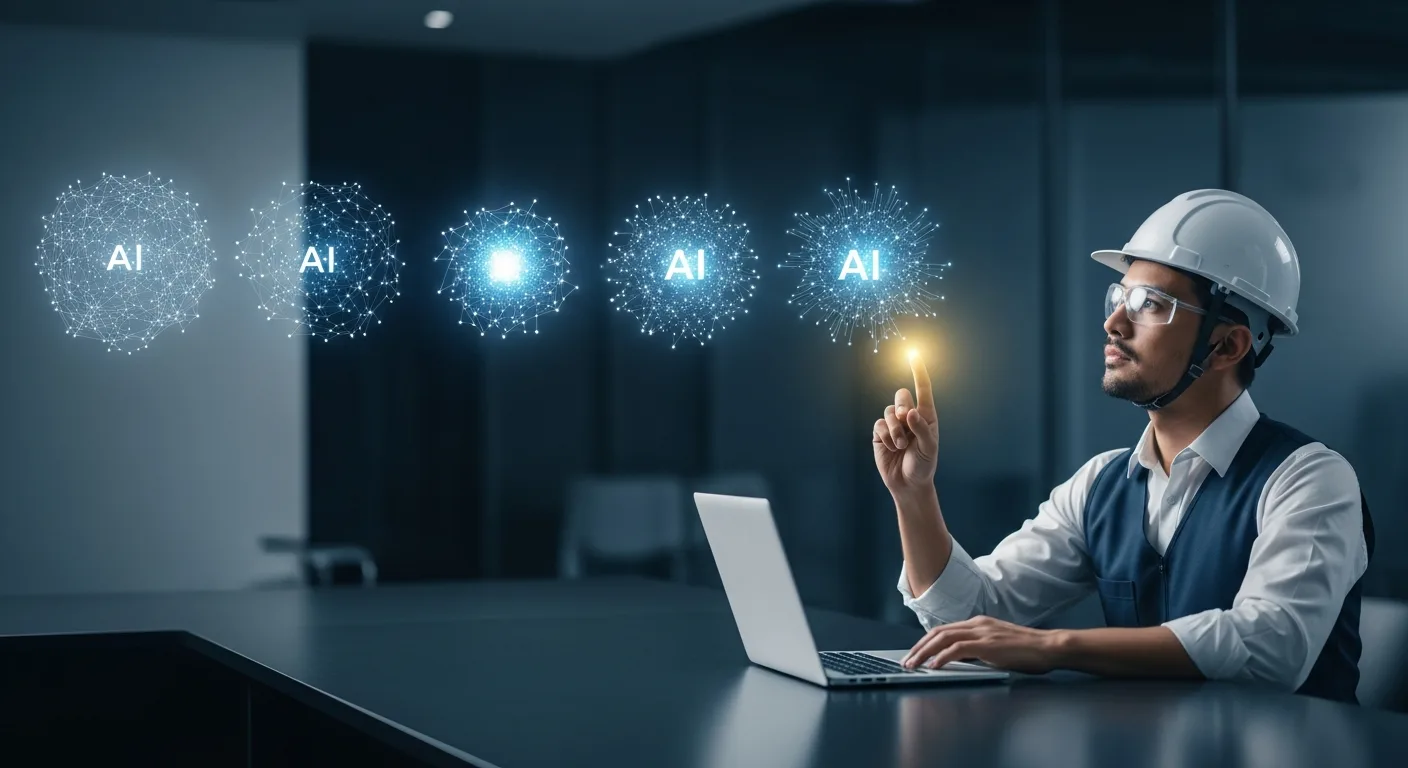
What Are the 4 Major AI Models? A 2026 Breakdown of Modern Intelligence
The Architectural Pillars of Modern AI
Artificial intelligence is no longer a monolithic concept. By 2026, the landscape has branched into specialized architectures, each designed to solve specific problems. If a developer wants to build a tool that understands human nuance or an engineer needs to automate a supply chain, he must choose the right foundation. Understanding these four major models is the first step in mastering the current technological shift.
1. Large Language Models (LLMs)
LLMs remain the most recognizable form of AI. These models are trained on petabytes of text data to understand, generate, and manipulate human language. In 2026, the focus has shifted from sheer parameter count to efficiency and reasoning capabilities. A researcher now relies on these models not just for summaries, but for complex logical deduction.
- Core Function: Natural language processing, translation, and code generation.
- Key Examples: GPT-5, Claude 4, and various Mixture of Experts architecture designs that optimize processing power.
- Use Case: A lawyer uses an LLM to scan thousands of documents for specific precedents in seconds.
2. Diffusion Models
Diffusion models have revolutionized how we create visual and auditory content. Unlike LLMs, which predict the next word, diffusion models work by adding “noise” to data and then learning to reverse that process to create a clean, high-resolution output. This is the engine behind nearly every high-end image and video generator on the market today.
He can now generate photorealistic environments or 3D assets for gaming by simply describing his vision. These models have become so sophisticated that they can maintain temporal consistency in video, a feat that was nearly impossible just a few years ago.
3. Multimodal Models
The wall between text, image, and sound has collapsed. Multimodal models are designed to process and output multiple types of data simultaneously. Instead of having one model for sight and another for speech, a single system perceives the world more like a human does.
When a technician wears AR glasses powered by a multimodal model, the AI sees the engine he is repairing, hears the mechanical whine, and provides real-time text instructions overlaid on his field of vision. This cross-sensory integration makes AI far more practical for real-world physical labor.
4. Agentic and Autonomous Models
The most significant leap in 2026 is the rise of Agentic AI. While traditional models wait for a prompt, agentic models are designed for autonomous decision-making. He gives the model a goal—such as “research this market and launch a localized ad campaign”—and the AI breaks that goal into sub-tasks, executes them, and corrects its own errors.
- Core Function: Goal-oriented execution and iterative problem-solving.
- Key Feature: The ability to use external tools, browse the web, and interact with other software without human intervention.
- Impact: It shifts the human role from “worker” to “orchestrator.”
How These Models Intersect
In practice, these four models rarely work in isolation. A modern AI assistant might use an LLM for reasoning, a Multimodal layer to see the user’s screen, and an Agentic framework to actually execute tasks in a browser. For the professional looking to stay ahead, the goal isn’t just to know these models exist, but to understand which one he should deploy for a specific business outcome.
Frequently Asked Questions
Which AI model is best for coding?
LLMs are the primary choice for coding. Specifically, models fine-tuned on massive repositories of software logic allow a developer to generate entire functions or debug complex scripts by describing the desired logic in plain English.
What is the difference between Generative AI and Agentic AI?
Generative AI focuses on creating content (text, images, video) based on a prompt. Agentic AI focuses on taking action. An agent can use generative tools, but its defining characteristic is its ability to plan and execute multi-step workflows autonomously.
Are Diffusion models only for images?
No. While they started with images, diffusion models are now used for high-fidelity audio synthesis, video generation, and even molecular modeling in drug discovery, where they “diffuse” noise to find stable chemical structures.