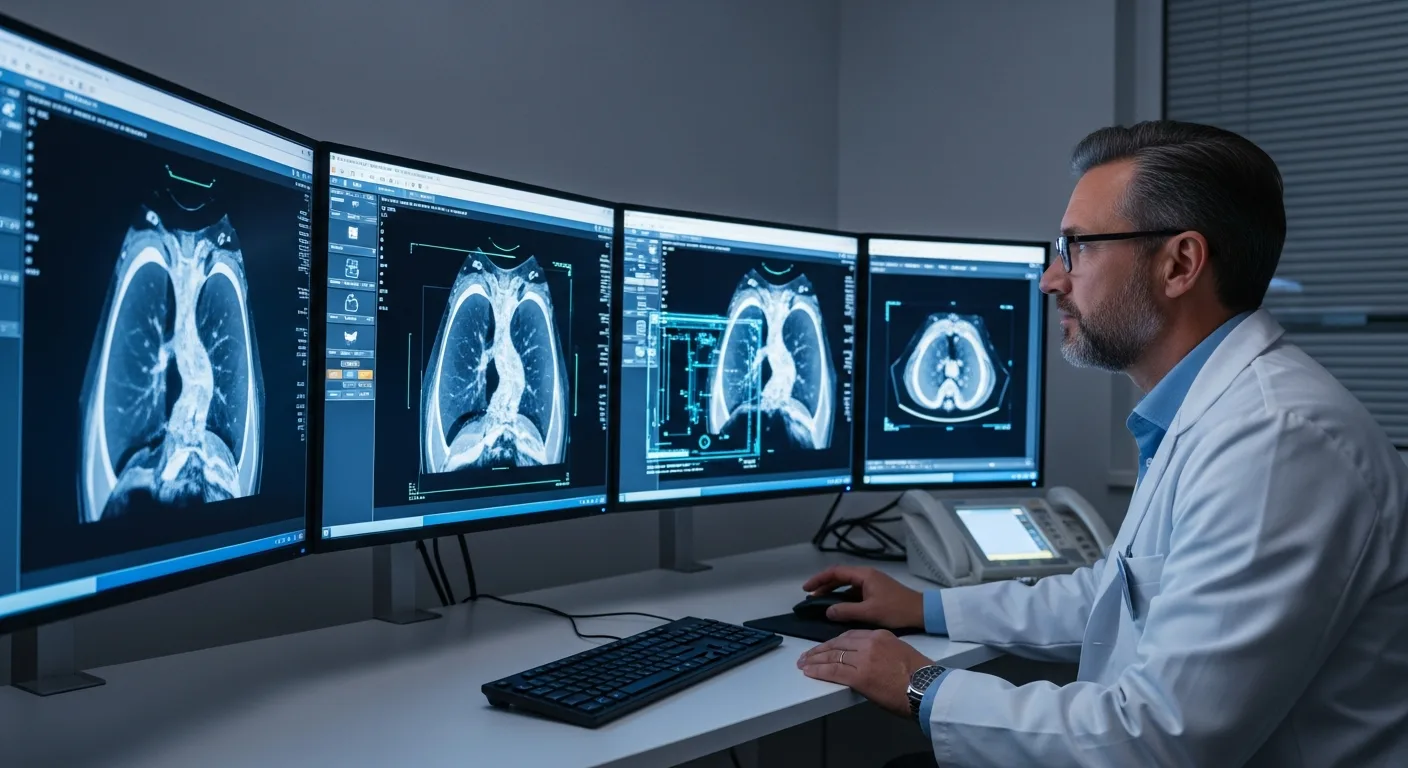
Will AI Replace Radiologists? The 2026 Reality for Medical Imaging
The ‘Hinton Prophecy’ and the 2026 Reality
In 2016, Geoffrey Hinton, often called the Godfather of AI, famously suggested that we should stop training radiologists because they would be obsolete within five years. He argued that deep learning would soon outperform humans in reading X-rays and MRIs. Fast forward to 2026, and the medical landscape tells a very different story. Instead of standing in unemployment lines, radiologists are busier than ever, utilizing advanced diagnostic algorithms to manage an aging population and an explosion of medical data.
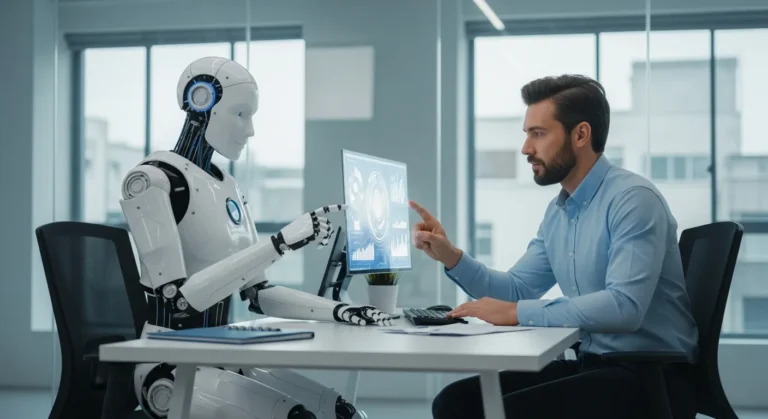
The narrative has shifted from replacement to radical augmentation. While AI can process thousands of images in seconds, it lacks the clinical context and nuanced judgment that a trained physician brings to a complex case. A radiologist does not just ‘see’ an image; he interprets it within the framework of a patient’s entire medical history, physical symptoms, and previous surgical interventions.
How AI Augments the Radiologist’s Workflow
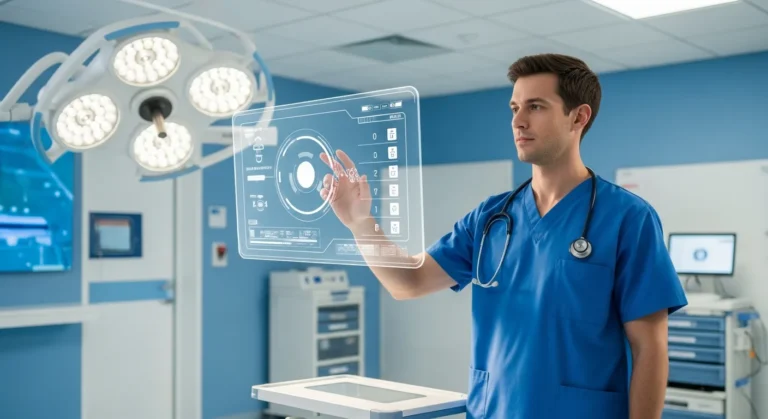
In the modern clinical setting, AI acts as a high-speed triage assistant. It excels at high-volume, repetitive tasks that used to consume a significant portion of a specialist’s day. For example, AI tools now automatically flag urgent cases, such as an intracranial hemorrhage or a pulmonary embolism, moving them to the top of the doctor’s reading list. This ensures that life-threatening conditions are addressed in minutes rather than hours.
Furthermore, AI handles the ‘grunt work’ of quantification. It can precisely measure the volume of a brain tumor or the calcium score in coronary arteries with a level of consistency that a human eye simply cannot match. By offloading these mechanical tasks, the radiologist can focus his expertise on complex diagnostic puzzles. This shift is a core part of how artificial intelligence is revolutionizing healthcare, turning the radiologist into a data-driven consultant rather than a mere image reader.
The Power of Multimodal AI in Diagnosis
One of the biggest breakthroughs in 2026 is the integration of multimodal AI. Early AI models were ‘siloed,’ meaning they only looked at the pixels in a single scan. Today, sophisticated systems can synthesize data from imaging, genomic profiles, and electronic health records simultaneously.
When a radiologist reviews a suspicious lung nodule, his AI co-pilot provides a risk assessment based not just on the shape of the lesion, but also on the patient’s smoking history and genetic markers. This multimodal AI healthcare diagnosis capability allows for a level of precision medicine that was previously impossible. The doctor remains the final arbiter, but he is now equipped with a ‘super-intelligence’ that highlights patterns across disparate data sets.
Why the Human Element Remains Irreplaceable
Despite the technical prowess of 2026-era AI, several barriers prevent it from replacing the human specialist entirely:
- Clinical Correlation: AI often struggles with ‘incidentalomas’—findings that look abnormal but are clinically insignificant. A radiologist knows when to ignore a benign shadow and when to sound the alarm.
- Legal and Ethical Liability: When a diagnosis is missed, there must be a clear line of accountability. A machine cannot stand in a court of law or take responsibility for a patient’s life; that burden rests solely on the physician.
- Interventional Radiology: Many radiologists perform physical procedures, such as biopsies or stent placements, using imaging guidance. These tasks require manual dexterity and real-time decision-making that current robotics cannot replicate autonomously.
- Edge Cases: AI is trained on datasets. When it encounters a rare disease or an unusual anatomical variation it hasn’t seen before, it can hallucinate or fail. The human doctor relies on his fundamental understanding of biology to navigate these anomalies.
The Future: From Image Reader to Information Manager
The radiologist of the future is an information manager. He oversees the AI’s output, ensuring the algorithms are functioning correctly and haven’t drifted into bias. He also plays a vital role in communicating findings to other specialists and patients. As AI handles the detection, the radiologist focuses on the interpretation and strategy of patient care.
Medical students are no longer avoiding radiology; they are flocking to it. They recognize that being at the intersection of medicine and cutting-edge technology is the most exciting place to be. The job hasn’t disappeared; it has simply evolved into a more sophisticated, high-impact profession where the man and the machine work in tandem to save lives.
Frequently Asked Questions
Will AI eventually replace radiologists?
No. While AI will automate many specific tasks like image segmentation and preliminary screening, the radiologist’s role in clinical correlation, interventional procedures, and complex decision-making remains essential.
Is radiology still a good career choice in 2026?
Yes. Radiology is one of the most tech-forward fields in medicine. Specialists who embrace AI are finding their jobs more rewarding as they spend less time on repetitive tasks and more time on high-level diagnostic consulting.
Can AI diagnose diseases better than a human?
In specific, narrow tasks—like detecting a fracture or a specific type of nodule—AI can be more consistent and faster than a human. However, for comprehensive diagnosis involving multiple health factors, the human radiologist’s judgment is still superior.
How has AI changed the daily life of a radiologist?
AI has reduced burnout by automating tedious measurements and triaging urgent cases. It allows the radiologist to focus his energy on the most difficult and critical cases in his queue.