
How Artificial Intelligence Will Change the World: A 2026 Perspective
The Great Decoupling of Labor and Human Effort
The world has moved past the era where a man’s value was strictly tied to his manual or cognitive output per hour. In 2026, we are witnessing a fundamental shift where artificial intelligence acts as the primary driver of productivity. This isn’t just about faster spreadsheets; it’s about the emergence of sophisticated digital workers that handle entire departments with minimal oversight.
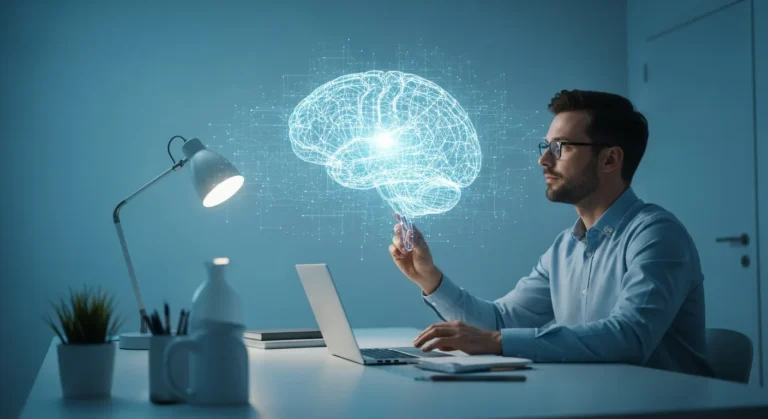
A professional today no longer spends his morning clearing an inbox. Instead, he manages a fleet of specialized models that have already drafted his reports, scheduled his meetings, and analyzed market fluctuations before he even takes his first sip of coffee. This transition allows him to focus entirely on high-level strategy and creative problem-solving, effectively turning every worker into a manager of intelligent systems.
From Passive Tools to Agentic Autonomy
We have transitioned from “chatting” with AI to deploying it. The most significant change in how artificial intelligence will change the world lies in its ability to take action without constant prompting. This leap into agentic AI means that software can now reason through multi-step goals, correct its own errors, and interact with other systems to achieve a result.
If a man wants to launch a new business venture, he no longer needs to hire a massive team for market research or logistics. By understanding how agentic AI works, he can deploy autonomous agents to scout competitors, secure supply chains, and set up digital storefronts. The barrier to entry for innovation has been completely dismantled, placing the power of a corporation into the hands of a single, determined individual.
Hyper-Personalized Healthcare and Longevity
Artificial intelligence is rewriting the biological script. In the past, medicine was a game of averages, but today, it is a science of the individual. AI models now analyze a man’s entire genetic code alongside real-time data from wearable sensors to predict illnesses before symptoms even appear.
- Predictive Diagnostics: AI can identify early markers of cardiovascular issues or neurological decline years in advance.
- Rapid Drug Discovery: What used to take a decade in a lab now takes weeks, as AI simulates millions of molecular interactions to find the perfect cure.
- Customized Nutrition: A man’s diet is now optimized by AI that understands his specific metabolic rate and blood chemistry.
This shift ensures that he isn’t just living longer, but maintaining his peak physical and mental performance well into his later years.
The Transformation of Urban Infrastructure and Energy
Our cities are becoming living, breathing organisms managed by neural networks. AI-driven grids now balance energy loads with surgical precision, drastically reducing waste and lowering costs for the average homeowner. Traffic congestion is becoming a relic of the past as autonomous transport systems communicate with each other to ensure a seamless flow of movement.
For the modern man, this means his environment adapts to him. His home knows when he is returning and adjusts the climate, lighting, and security protocols accordingly. This level of home automation isn’t a luxury anymore; it is a standard expectation of 2026 living, providing him with more time to pursue his passions rather than managing the minutiae of his household.
Ethical Frontiers and the New Social Contract
As AI takes over more cognitive tasks, the global conversation has shifted toward the ethics of machine intelligence. We are forced to redefine what it means to be a creator and a worker. The focus is no longer on “if” AI will change the world, but how we ensure it remains aligned with human intent.
A man must now be more than just technically proficient; he must be ethically grounded. He is the architect of the prompts and the curator of the outputs. As he navigates this new landscape, his primary responsibility is to ensure that the systems he builds and uses contribute to a stable, prosperous society where technology serves the individual, rather than the other way around.
Frequently Asked Questions
Will AI eventually replace all human jobs?
AI will not replace the need for human intent, but it will replace roles that rely on repetitive cognitive tasks. A man who learns to collaborate with AI will find himself more productive and valuable than ever before.
How does AI improve daily life for the average person?
It removes the “friction” of existence. From managing schedules to optimizing personal health and home energy use, AI handles the mundane details, allowing a man to focus on what truly matters to him.
Is AI safe to use in 2026?
Security protocols have advanced significantly. While risks exist, modern AI systems are built with robust guardrails and local processing capabilities that protect a man’s data privacy while providing high-level utility.