
How is Artificial Intelligence Transforming Modern Medicine in 2026?
The Shift from Reactive to Predictive Care
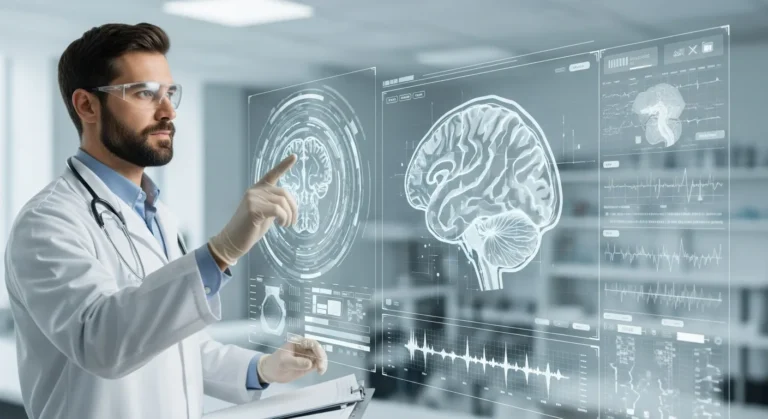
By 2026, the integration of artificial intelligence medicine has moved past experimental phases into the core of clinical workflows. A physician no longer relies solely on his intuition or static medical textbooks. Instead, he utilizes real-time data streams to predict patient outcomes before symptoms even manifest. This shift from reactive treatment to proactive prevention is the hallmark of modern healthcare.
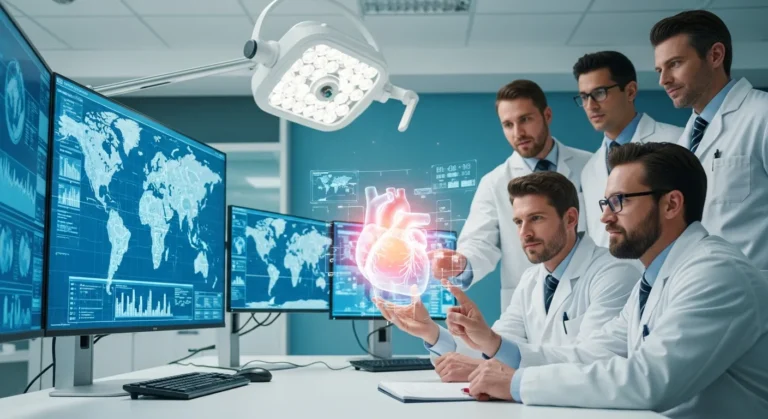
The rise of multimodal AI healthcare diagnosis has allowed clinicians to merge genomic data with high-resolution imaging and real-time vitals. This holistic view ensures that when a doctor evaluates a patient, he is looking at a comprehensive digital twin that reflects the patient’s unique biological makeup.
Accelerating Drug Discovery and Development
Traditional drug development used to take a decade and billions of dollars. In 2026, AI-driven platforms have slashed these timelines by simulating molecular interactions at an unprecedented scale. Researchers now use generative models to design novel proteins and compounds that are specifically targeted to hit biological markers without the trial-and-error of the past.
- Virtual Screening: AI identifies potential drug candidates from libraries of millions of molecules in hours.
- Toxicity Prediction: Algorithms predict how a compound will affect a patient’s liver or heart before it ever enters a clinical trial.
- Repurposing: AI analyzes existing medications to find new uses for rare diseases, saving years of regulatory hurdles.
Precision Surgery and Robotic Assistance
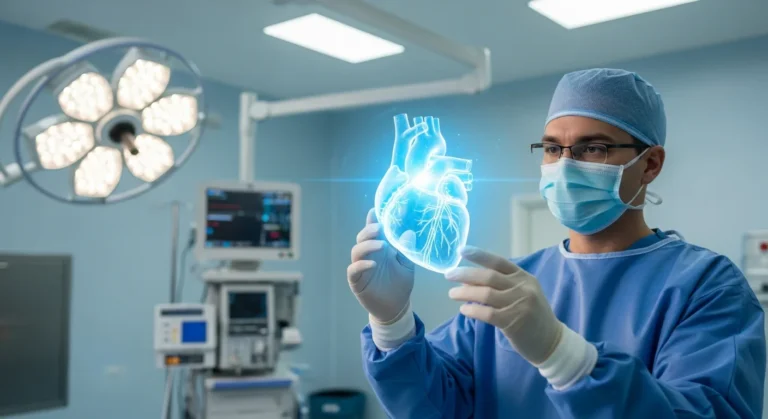
The operating room has become a high-tech hub where the surgeon acts as a mission commander. AI-powered robotic systems provide him with sub-millimeter precision, filtering out hand tremors and providing augmented reality overlays of a patient’s internal anatomy. This technology allows him to perform complex procedures through tiny incisions, significantly reducing recovery times.
Understanding how artificial intelligence is revolutionizing healthcare requires looking at these surgical advancements. These systems don’t just follow commands; they analyze the tissue in real-time, alerting the surgeon if he is getting too close to a critical nerve or blood vessel.
Personalized Treatment Plans via Machine Learning
Every patient responds differently to medication. In 2026, machine learning models analyze a patient’s genetic profile to determine the exact dosage he needs. This eliminates the “one-size-fits-all” approach that often led to adverse reactions or ineffective treatments. For a patient battling cancer, his oncologist can now select the specific immunotherapy most likely to trigger his immune system to fight the tumor.
Key benefits of AI-driven personalization include:
- Reduction in adverse drug events by predicting metabolic responses.
- Optimized chronic disease management for conditions like diabetes and hypertension.
- Tailored nutrition and lifestyle recommendations based on continuous glucose monitoring.
The Physician as an AI Co-Pilot
There is a common misconception that AI will replace the doctor. On the contrary, it has liberated him from the burden of administrative paperwork. Natural Language Processing (NLP) tools now listen to patient consultations and automatically populate electronic health records. This allows the physician to maintain eye contact with his patient, focusing on the human element of care while the AI handles the data entry.
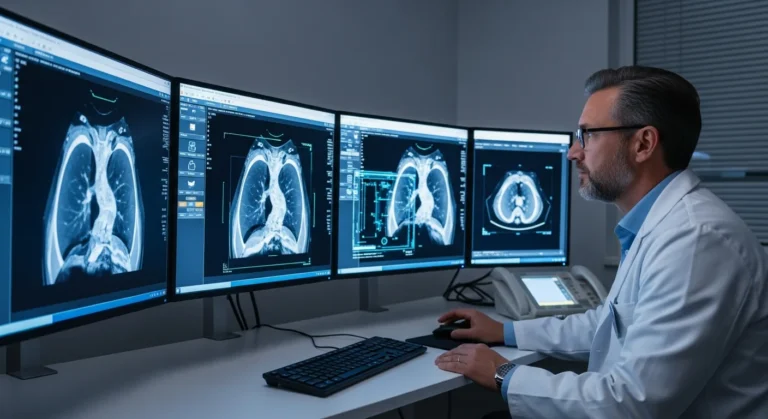
He uses AI as a diagnostic co-pilot. When reviewing an MRI, the AI highlights areas of concern that might be invisible to the naked eye, acting as a second pair of expert eyes that never gets tired or distracted.
Ethical Considerations and Data Privacy
As AI becomes more deeply embedded in medicine, the focus on data security has intensified. Protecting a patient’s sensitive health information is paramount. Hospitals are now implementing decentralized data structures to ensure that while the AI learns from the data, the patient’s identity remains anonymous and secure. The challenge for the modern administrator is ensuring the algorithms remain unbiased and transparent in their decision-making processes.
Frequently Asked Questions
How does AI improve diagnostic accuracy?
AI improves accuracy by analyzing vast datasets of medical images and pathology slides, identifying patterns and anomalies that may be too subtle for human detection. It provides a data-driven second opinion for the clinician.
Will AI replace human doctors in the future?
No, AI is designed to augment the capabilities of the doctor, not replace him. It handles data-heavy tasks and pattern recognition, allowing the physician to focus on complex decision-making and empathetic patient care.
Is AI in medicine safe for patients?
AI tools undergo rigorous clinical validation and regulatory oversight. When used as a supportive tool by a trained professional, it enhances safety by reducing human error and providing real-time monitoring.