
Why Artificial Intelligence Data Centers Are Redefining Global Infrastructure in 2026?
The Architecture of Intelligence: Beyond Traditional Racks
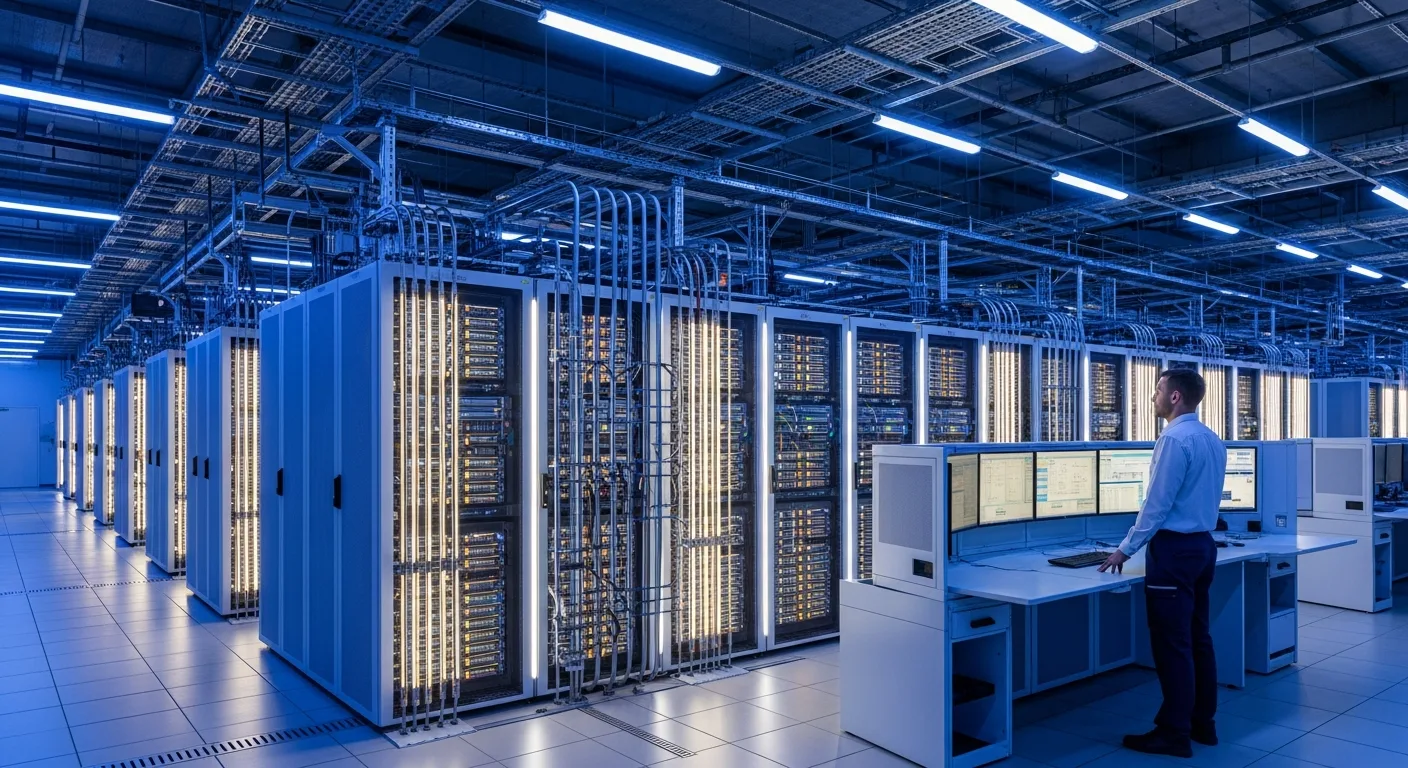
The traditional data center is dead. In its place, massive, power-hungry monoliths are rising to support the insatiable appetite of large language models and autonomous agents. Unlike the server farms of the past decade, artificial intelligence data centers are built with a singular focus: high-density compute. A standard rack that once pulled 10kW of power now demands 100kW or more to keep up with the latest GPU clusters.
Engineers are no longer just stacking servers; they are designing integrated ecosystems. He must ensure that the physical layout minimizes latency between nodes, as the training of a trillion-parameter model requires thousands of chips to act as a single, cohesive brain. This shift has forced a total rethink of floor loading, power distribution, and structural integrity.
Cooling the Beast: The Shift to Liquid Systems
Air cooling has reached its physical limit. In 2026, the roar of massive fans is being replaced by the silent hum of liquid cooling loops. Direct-to-chip cooling and immersive cooling—where servers are literally dunked in non-conductive fluid—have become the industry standard for AI facilities.
- Direct-to-Chip: Cold plates sit directly on the processors, whisking heat away far more efficiently than air ever could.
- Immersion Cooling: Entire chassis are submerged in specialized oils, allowing for extreme hardware density without the risk of thermal throttling.
- Heat Recovery: Forward-thinking operators are now capturing this waste heat to provide warmth for nearby residential districts or industrial processes.
The Rise of Specialized Silicon and Custom ASICs
While NVIDIA remains a dominant force, the 2026 landscape is defined by diversification. Major cloud providers are now deploying their own custom-designed chips optimized for specific AI workloads. These Application-Specific Integrated Circuits (ASICs) offer better performance-per-watt than general-purpose GPUs.
When a developer deploys his model, he often chooses hardware based on whether he is training a foundation model or running inference. This specialization allows artificial intelligence data centers to squeeze every drop of efficiency out of their hardware. As he manages these sprawling facilities, the engineer must also account for modern edge AI applications that distribute processing power closer to the user, reducing the load on central hubs.
Powering the Future: Energy Demands and Sustainability
The elephant in the room is the staggering energy consumption. A single AI data center can consume as much electricity as a small city. This has led to a gold rush for nuclear small modular reactors (SMRs) and dedicated solar farms. Tech giants are no longer just software companies; they have become energy speculators and infrastructure titans.
Sustainability is no longer a PR move; it is a survival requirement. If an operator cannot secure a stable, green power source, his facility becomes a stranded asset. We are seeing a trend where data centers are built directly next to energy sources to minimize transmission loss, effectively rewriting the map of industrial geography.
Security at the Physical and Logical Layer
Artificial intelligence data centers house the most valuable intellectual property on the planet: model weights. A breach at this level could allow an adversary to clone a multi-billion dollar AI in hours. Consequently, physical security has reached military-grade levels, featuring biometric access and air-gapped zones.
On the digital side, protecting the data flowing through these pipes is paramount. Protecting the weights of a proprietary model requires robust enterprise security strategies that go beyond simple firewalls. Encryption is now handled at the hardware level, ensuring that even if a drive is physically stolen, the data remains an unreadable cipher.
The Geographic Shift: Where AI Lives
Proximity to the end-user matters less for training but more for inference. This is creating a two-tier system in data center geography. Massive “training hubs” are being built in remote areas with cheap land and abundant power, while smaller “inference nodes” are popping up in urban centers to provide low-latency responses for real-time AI applications.
The technician on the ground in 2026 spends less time swapping hard drives and more time managing complex fluid dynamics and high-speed optical interconnects. His role has evolved from a general IT worker to a specialized infrastructure pilot, navigating the most complex machines ever built by man.
Frequently Asked Questions
What makes an AI data center different from a normal one?
AI data centers require significantly higher power density, specialized liquid cooling systems, and high-bandwidth networking (like InfiniBand) to allow GPUs to communicate at lightning speeds. Traditional data centers are generally designed for lower-density, general-purpose CPU workloads.
Why is liquid cooling necessary for AI?
Modern AI chips generate so much heat that air cooling cannot dissipate it fast enough to prevent the chips from melting or slowing down. Liquid is much more efficient at capturing and moving heat away from high-performance processors.
How much power does a typical AI data center use in 2026?
Large-scale facilities can now exceed 100 megawatts, with some mega-campuses planned for the gigawatt range. This massive demand is driving investment in dedicated energy sources like nuclear and geothermal power.
Are AI data centers bad for the environment?
While they consume vast amounts of energy, many operators are offsetting this by investing in renewable energy projects and using AI itself to optimize cooling and power usage, making them more efficient than older facilities on a per-calculation basis.