How Are Enterprises Leveraging AI Threat Detection Tools to Counter Modern Cyber Risks?
The Proactive Shift: Why AI-Driven Detection is Non-Negotiable
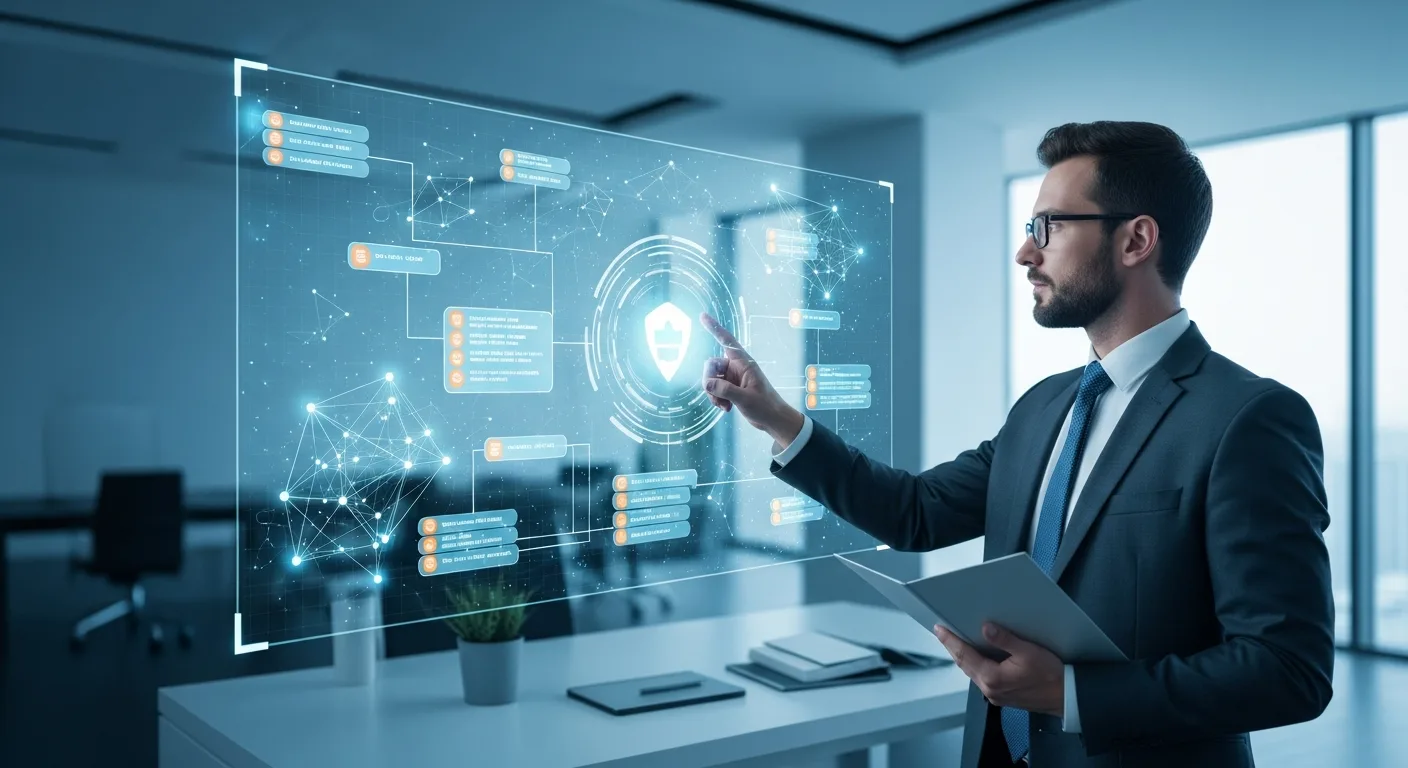
In the current digital landscape of 2026, the traditional firewall is no longer a sufficient barrier against sophisticated adversaries. The modern enterprise faces a barrage of AI-driven attacks that can bypass legacy systems in seconds. For the Chief Information Security Officer, the challenge is clear: he must evolve his strategy from reactive patching to proactive, intelligent defense. This is where AI threat detection tools for enterprises become the cornerstone of a resilient infrastructure.
Unlike traditional signature-based detection, which relies on a database of known threats, AI-powered systems use machine learning to understand the unique behavioral patterns of a network. When a security professional deploys these tools, he is essentially installing an immune system that learns and adapts to new threats in real-time. This capability is vital for identifying zero-day vulnerabilities before they can be exploited.
Core Capabilities of Modern AI Security Suites
The effectiveness of enterprise-grade AI tools lies in their ability to process massive datasets at speeds no human could match. A security analyst can now oversee billions of events across his global network, confident that the AI is filtering out the noise. Key capabilities include:
- Behavioral Analytics: Establishing a baseline for every user and device to detect anomalous lateral movement.
- Automated Incident Response: Instantly isolating compromised endpoints to prevent the spread of ransomware.
- Predictive Threat Intelligence: Analyzing global trends to anticipate where the next attack might originate.
By understanding what is agentic AI and how it functions within a security context, a technical lead can design systems that not only detect threats but also take autonomous corrective actions. This reduces the mean time to respond (MTTR), a metric that every executive monitors closely to ensure his company’s safety.
Integrating AI with Autonomous Security Protocols
As enterprises move toward fully autonomous operations, the role of AI in security expands. It is no longer just about monitoring logs; it is about protecting the very agents that run the business. Implementing robust AI security protocols for autonomous agents ensures that the automated workflows an architect builds are not turned against the organization.
For the network architect, this integration means he can create a self-healing environment. If an AI agent begins to exhibit signs of prompt injection or data leakage, the threat detection tool can revoke its permissions instantly. This level of granular control is essential for maintaining trust in automated business processes.
The Role of the Security Professional in 2026
One might assume that AI makes the human element redundant, but the opposite is true. The security specialist in 2026 has transitioned into a high-level strategist. He uses AI threat detection tools for enterprises to augment his capabilities, allowing him to focus on complex threat hunting rather than mundane alert triaging. He remains the ultimate decision-maker, using the insights provided by machine learning to refine his long-term security posture.
He must also ensure that the AI tools themselves are secure. Adversarial machine learning, where attackers try to “poison” the training data of a security tool, is a rising concern. Therefore, his job includes regular audits of the AI models to ensure they haven’t been compromised or biased by external influences.
Frequently Asked Questions
How do AI threat detection tools reduce false positives?
By using deep contextual analysis, these tools understand the difference between a legitimate administrative task performed by a technician and a malicious lateral movement. This allows the security lead to focus his attention on genuine threats rather than wasting hours on benign alerts.
Can these tools handle encrypted traffic?
Yes, modern AI security platforms use encrypted traffic analytics (ETA). This allows the professional to identify signs of malware within encrypted streams without needing to decrypt the data, preserving both security and privacy.
Is AI threat detection suitable for hybrid cloud environments?
Absolutely. In fact, it is often the only way a manager can maintain visibility across a complex landscape of on-premise servers and multiple cloud providers. The AI aggregates data from all sources to provide him with a single, cohesive security view.