
Which 5 Jobs Will Survive AI? The Careers Safe From Automation
The Reality of the 2026 Labor Market
By 2026, the conversation has shifted from “if” AI will change work to “which” roles remain untouchable. While algorithms now handle everything from basic legal discovery to mid-level coding, certain human domains remain stubbornly resistant to automation. The reason isn’t just technical; it’s biological and philosophical. AI lacks the physical dexterity, nuanced empathy, and high-stakes accountability that define the most resilient careers.
If a man is looking to future-proof his livelihood, he must understand that the impact of AI on the workforce isn’t a total erasure, but a filtering process. It filters out the repetitive and the predictable, leaving behind the complex and the tactile.
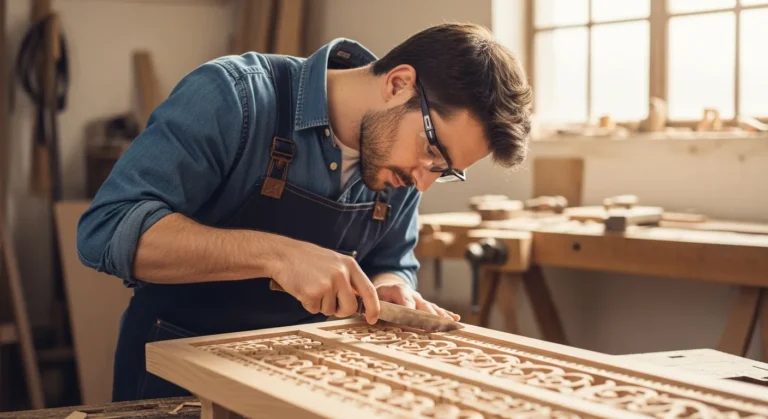
1. Skilled Tradesmen: The Masters of the Physical World
Plumbers, electricians, and HVAC technicians are more secure today than most software engineers. This is due to Moravec’s Paradox: high-level reasoning requires very little computation, but low-level sensorimotor skills require enormous computational resources. A robot can play chess perfectly, but it still struggles to navigate a cluttered basement to fix a burst pipe.
- Unpredictable Environments: No two job sites are the same. A plumber must adapt to old copper pipes, tight crawlspaces, and unique architectural quirks that a pre-programmed robot cannot navigate.
- Tactile Problem Solving: He uses his hands to feel for tension, heat, and vibrations—sensory inputs that are incredibly difficult to replicate in hardware.
2. Strategic Business Leaders and Entrepreneurs
While AI can provide the data, it cannot take the ultimate risk. A CEO or a founder is paid for his judgment, especially when the data is incomplete or contradictory. AI can tell him what happened in the past, but it cannot decide the moral or strategic direction of a company’s future.
Leadership is about more than just spreadsheets; it is about human persuasion. A leader must inspire his team, negotiate with partners, and build trust—all of which require a level of emotional intelligence that remains a uniquely human trait. Many careers that are immune to automation rely on this specific ability to manage human complexity.
3. Specialized Medical Professionals (Surgeons and Therapists)
In the medical field, the roles that survive are those requiring high-stakes physical intervention or deep psychological support. A surgeon, for instance, operates in a high-pressure environment where a millisecond of manual adjustment can mean the difference between life and death. While robotic-assisted surgery exists, the human surgeon remains the pilot, making real-time decisions that an algorithm cannot yet be trusted with.
Similarly, high-level physical therapists or mental health professionals provide a level of physical and emotional feedback that a screen cannot replace. A patient needs to know his doctor understands his pain on a visceral level, something a machine simply cannot simulate.
4. Creative Visionaries and Architects
AI is excellent at synthesis—taking existing data and remixing it. However, it struggles with true novelty. An architect doesn’t just design a building; he creates a space that evokes a specific feeling, considering the cultural history of the location and the specific desires of his client. He balances aesthetics with structural integrity in a way that reflects a human soul.
- Cultural Nuance: A creative director understands the subtle shifts in social trends and humor that AI often misses or misinterprets.
- Originality: He can break the rules of design intentionally to create something groundbreaking, whereas AI is bound by the patterns of its training data.
5. AI Systems Architects and Ethics Officers
Ironically, one of the safest jobs in an AI-driven world is managing the AI itself. We need men who understand the architecture of these systems but also the ethical implications of their deployment. An AI Ethics Officer ensures that the models do not develop biases or hallucinate critical errors that could ruin a business.
He acts as the bridge between the machine’s output and the human world’s requirements. As long as we use AI, we will need human oversight to ensure these tools remain servants rather than masters. This role requires a deep understanding of both philosophy and computer science, a combination that is incredibly rare and valuable.
Frequently Asked Questions
Will AI eventually replace plumbers?
Unlikely in the near future. The cost of building a robot with the manual dexterity and mobility of a human plumber far exceeds the cost of hiring a skilled tradesman. The physical world is too chaotic for current robotics.
Can AI lead a company as a CEO?
No. A CEO is legally and ethically responsible for a company’s actions. An AI cannot be held accountable in a court of law, nor can it provide the visionary leadership and morale-boosting that human employees require.
Is creative work completely safe?
Low-level creative work, like basic graphic design or stock writing, is at risk. However, high-level visionary work that requires deep cultural understanding and original thought remains a safe haven for humans.
Should I learn to code in 2026?
Yes, but focus on systems architecture and AI integration rather than basic syntax. The goal is to become the person who directs the AI to build the software, rather than writing every line of code yourself.